- Free Consultation: (318) 419-3735 Tap Here To Call Us






The Science Behind “They Should Have Seen It”: How Human Factors Experts Analyze Car Accidents


After a serious collision, one question comes up again and again:
How did the driver not see that?
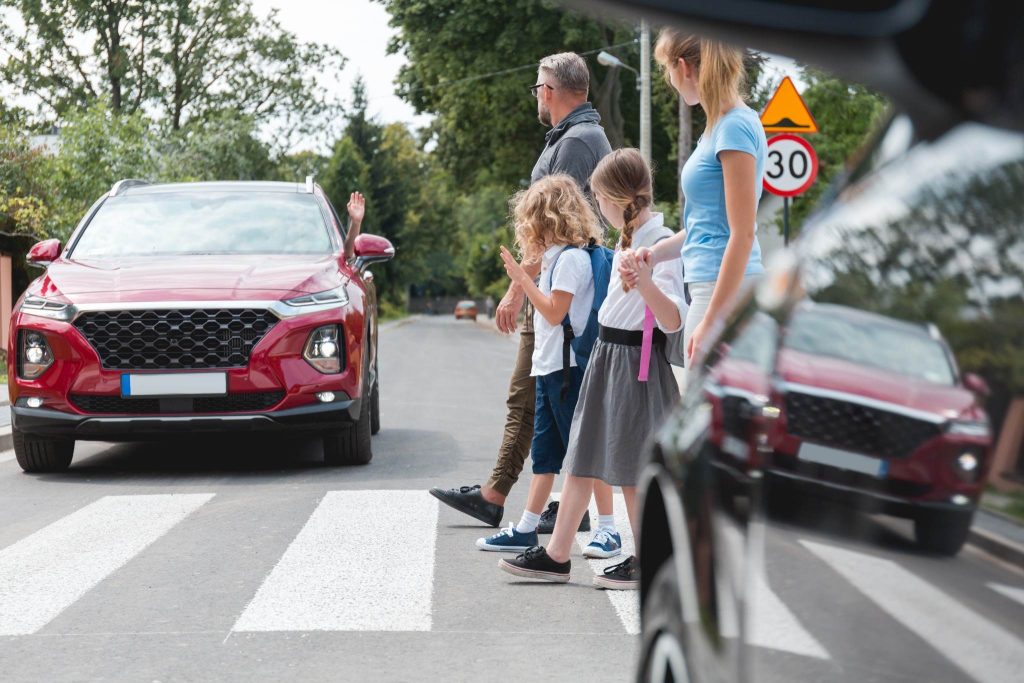
The pedestrian was in the crosswalk. The stopped traffic was directly ahead. The warning signs were visible. The other vehicle was there to be seen. There appeared to be enough time to brake.
Yet the driver says, “I never saw them,” or “I didn’t have enough time to react.”
Those statements can sound like the end of the inquiry. They aren’t.
In certain collision cases, a human factors expert can use research, physical evidence, vehicle data, lighting measurements, sight distances, and the driver’s own actions to analyze a much more important question:
What would an ordinary driver have perceived, and how would an ordinary driver have responded under the same circumstances?
That distinction can fundamentally change how a collision is understood.
What Is Human Factors?
Human factors is the study of how people interact with their environment. A synonymous term is ergonomics. You may have heard about ergonomic chairs or other devices. Human factors is synonymous with that and certain human factors experts focus specifically on driver behavior.
In a motor vehicle collision, that means studying driver behavior: what information was available to a driver, where the driver’s attention would ordinarily be directed, when a hazard became recognizable, how much time a driver had to respond, and whether the driver’s actual response was consistent with normal driving behavior.
Human factors research can examine things such as:
- perception and response time;
- speed selection;
- braking;
- steering and lane position;
- visibility and lighting;
- hazard recognition;
- signs and roadway markings;
- driver attention;
- cognitive workload;
- distraction, fatigue, or degraded performance; and
- how drivers respond to expected and unexpected hazards.
One human factors expert described the discipline simply as studying how humans interact with their environment, with his particular work focused on driver behavior—including speed choices, lane position, response time, where drivers look, and how they react to different types of hazards.
That can be enormously important in a collision case because crashes happen in seconds.
Sometimes fractions of seconds.
And what happens during those seconds can tell a story.
A Crash Reconstruction Tells You What Happened. Human Factors Can Help Explain the Driver.
Accident reconstruction and human factors frequently overlap, but they are not necessarily asking the same question.
A reconstruction expert may determine:
Where were the vehicles? How fast were they traveling? When did they collide?
A human factors analysis can take those findings and ask:
What did that information mean for the person behind the wheel?
Suppose evidence establishes that a hazard became visible 250 feet ahead of a vehicle.
Distance alone does not answer the case.
The questions become:
When should the driver have recognized the hazard?
How long would an ordinary driver take to begin responding?
Was braking the expected response?
How much distance did the driver’s speed consume during that response?
And, ultimately:
Was this collision actually unavoidable?
That last question matters.
Because there is an enormous difference between a driver who encounters a hazard too late to avoid a collision and a driver whose own speed, inattention, delayed response, or poor decision-making created the emergency that made the collision inevitable.
Perception-Reaction Time Is More Complicated Than “It Takes Two Seconds to React”
One of the most misunderstood concepts in collision cases is perception-reaction time.
It is tempting to treat reaction time as a universal number. It isn’t.
Human factors research instead examines how actual drivers respond to particular types of hazards under particular circumstances.
A driver must first recognize that something requires a response. Then the driver must initiate a response. If that response is braking, the driver’s foot must move from the accelerator toward the brake and sufficient braking must actually be applied.
In the testimony we reviewed, the expert analyzed research involving similar intersection path intrusions and testified that the average response was approximately 1.2 seconds, with 85% of drivers responding within approximately 1.6 seconds under those circumstances.
But the number itself is not the most interesting part.
The circumstances surrounding the number are.
Was the hazard expected or unexpected?
Was the driver approaching a marked crosswalk?
Were there warning signs?
Was the area known for pedestrian activity?
Was the hazard directly ahead or in the driver’s peripheral vision?
Was the driver traveling at a reasonable speed?
How much information was the driver trying to process at once?
These facts can change how the driver’s response should be evaluated.
INSIDER TAKE: “Reaction Time” Should Not Be Analyzed in a Vacuum
When someone says a driver “only had 1.5 seconds,” ask another question:
1.5 seconds from what?
From the moment of impact?
From the moment the driver actually reacted?
Or from the point at which an attentive driver should have recognized the developing hazard?
Those can be very different moments.
Visibility Is Not the Same Thing as “I Didn’t See It”

Drivers often defend a collision by saying they never saw the person, vehicle, object, or hazard before impact.
But a driver’s subjective recollection does not necessarily establish whether something was available to be seen.
Human factors experts can examine visibility scientifically.
That may include:
Lighting. How much light was actually present at the scene?
Contrast. How distinguishable was the object or pedestrian from the background?
Clothing. In pedestrian collisions, color and reflective material can affect recognition distance.
Headlights. What area would have been illuminated by the approaching vehicle?
Additional light sources. Streetlights and even other vehicles can affect recognition.
Sight lines. Were buildings, vegetation, vehicles, curves, or other objects actually obstructing the driver’s view?
Anticipation. Was this a location where a reasonable driver should already have been looking for a particular hazard?
The human factors testimony reviewed for this article illustrates just how detailed that investigation can become. The expert went to the collision scene, measured lighting, evaluated sight lines, considered pedestrian clothing, examined contrast, and compared the measurements to recognition thresholds.
In that case, roadway warnings also mattered. The approach included roadway markings and redundant pedestrian warning signs before the crosswalk. From a human factors perspective, those warnings gave drivers information about what they should anticipate ahead.
This creates an important distinction:
“I didn’t see it” is evidence about what a particular driver remembers.
“It could not reasonably be seen” is a scientific proposition.
Those are not the same thing.
Your Car May Record More About Your Reaction Than You Realize
Modern vehicles can contain some of the most powerful evidence in a serious collision.
An Event Data Recorder, commonly called an EDR, may contain pre-crash information concerning speed, accelerator input, braking, and other vehicle parameters.
Most people think of EDR evidence primarily as a way to determine speed.
Human factors analysis can go further.
Consider a hypothetical sequence:
The vehicle is traveling quickly.
The accelerator goes to zero.
But the brake does not immediately activate.
When braking finally begins, it is comparatively light.
The driver never reaches the level of braking normally associated with an emergency.
The brake is then released near impact.
A reconstructionist can tell us what the vehicle did.
A human factors expert may be able to compare the sequence of the driver’s actions to research concerning how ordinary drivers respond during emergencies.
In the testimony reviewed here, the expert did exactly that. He analyzed the interval between throttle release and brake application, the driver’s braking intensity, and how those measurements compared with typical driver behavior.
That means the black box may reveal more than speed.
It may preserve a second-by-second record of a driver’s decision-making.
Speed Changes More Than Impact Severity

Everyone understands that higher speeds can cause more severe injuries.
But speed can matter before the impact just as much.
Speed affects:
- how quickly a vehicle reaches a hazard;
- how much roadway is consumed while the driver perceives and responds;
- how much distance remains for braking;
- whether a pedestrian or another vehicle has time to clear the path; and
- the driver’s ability to safely process and respond to changing conditions.
And the relationship between speed and stopping distance is not simply linear.
The trial testimony provides a striking example. When discussing a vehicle traveling 70 mph, the expert explained that increasing speed causes stopping distance to increase dramatically; his case-specific calculation required approximately 250 feet for emergency braking alone, before adding reaction distance.
That creates a critical causation question in serious collision cases:
Did the hazard cause the crash—or did the driver’s speed eliminate the driver’s ability to avoid the hazard?
Those are very different cases.
Human Factors Can Examine Whether a Driver Was Mentally Overloaded
Driving requires a limited amount of attention.
The faster and more complicated the driving task becomes, the more mental resources the driver may have to devote to controlling the vehicle.
For example, following another vehicle closely at high speed can demand significant attention to that lead vehicle. The driver must constantly monitor its speed and movement because a sudden change could require an immediate response.
But attention devoted to one task can come at the expense of another.
In the testimony reviewed here, the expert explained that closely following another vehicle could consume mental resources that otherwise would be available for surrounding information—including recreational activity, warning signs, pedestrians, and a crosswalk.
That is an important concept in collision cases.
Sometimes the issue is not that a hazard was invisible.
The issue is that the driver created a driving situation that left too little capacity to recognize and respond to it.
What Does Swerving at the Last Second Tell Us?
Drivers sometimes describe swerving as evidence that they did everything possible to avoid a crash.
It certainly can be an avoidance maneuver.
But the timing matters.
The human factors testimony reviewed here explained that experienced drivers often slow or yield first in situations where those options are available, while last-second swerving can be associated with a late response or overload.
Again, the goal is not to isolate one action and declare it negligent.
The goal is to reconstruct the entire behavioral sequence:
What information was available?
When was it available?
Where was the driver looking?
How fast was the driver traveling?
When did the driver recognize the problem?
When did the accelerator release?
When did braking begin?
How hard was the braking?
Was there steering?
And how does that sequence compare with the responses of ordinary drivers?
Can Human Factors Help Evaluate Distraction, Fatigue, or Impairment?
Potentially—but this is an area where the expert’s discipline and the available evidence matter.
A human factors expert is not automatically a toxicologist, physician, or pharmacologist.
The testimony reviewed here expressly acknowledged that distinction. Instead, the expert described comparing the driver’s behavior against normal driver behavior and explained that markedly abnormal behavior can be associated with conditions such as impairment, distraction, or fatigue.
That distinction is important.
One unusual action may mean very little.
A pattern can mean much more.
Extreme speed.
Unexpected acceleration.
A delayed movement from accelerator to brake.
Weak emergency braking.
Failure to respond to multiple warnings.
A late swerve.
Failure to yield to a readily recognizable hazard.
Taken together—and combined with independent evidence concerning distraction, fatigue, alcohol, medication, or another potential cause—those behaviors may tell a much different story than any single data point standing alone.
If you believe you were in an accident with an impaired driver, read our blog post here to learn about Louisiana’s test for intoxication in civil cases.
When Should a Lawyer Consider Hiring a Human Factors Expert?
Not every car accident needs one.
But human factors analysis deserves serious consideration when the case involves disputed questions about:
Visibility: “I couldn’t see them.”
Reaction time: “There wasn’t enough time.”
Pedestrian recognition: “They came out of nowhere.”
Nighttime collisions: “It was too dark.”
Speed: “My speed didn’t cause the crash.”
Warnings: “I didn’t notice the sign.”
Distraction: “I was paying attention.”
Braking: “I slammed on the brakes.”
Avoidability: “Nothing I could have done would have prevented it.”
Driver behavior: “My reaction was normal.”
These cases frequently turn on statements that sound like common sense.
Human factors allows those statements to be tested against measurements, physical evidence, vehicle data, and research about actual drivers.
The Question Is Not Just What Happened. It Is What Should Have Happened.

Some of the most important evidence in a collision exists in the seconds before impact.
A roadway can warn a driver.
A pedestrian can become recognizable.
A vehicle ahead can begin slowing.
A driver’s foot can leave the accelerator.
A second can pass before the brake is applied.
The brakes can be applied too softly.
Speed can consume the remaining distance.
And then the collision occurs.
When those seconds matter, simply asking “What happened?” may not be enough.
A human factors expert can help answer the deeper questions:
What information was available to the driver?
When should the driver have recognized the danger?
What would an ordinary driver have done?
What did this driver actually do?
And perhaps most importantly:
If the driver had responded normally, would this collision have happened at all?
For people seriously injured in motor vehicle and commercial trucking collisions, answering those questions can be critical to understanding why a crash occurred and proving responsibility.
Salter Law represents people injured in serious automobile and commercial vehicle collisions throughout Louisiana. We believe significant cases deserve more than a surface-level investigation. When liability is disputed, we examine the evidence that can explain not only how a collision happened, but why.
If you or a family member has been seriously injured in a Louisiana collision and have questions about what the evidence really shows, contact Salter Law to discuss your case.